Mikel Arteta exclusive interview: ‘I have poison in my veins at Champions League defeat. It left a scar’
Mikel Arteta has opened up on the lasting pain of Arsenal's Champions League defeat, revealing how the experience continues to motivate him.
By Collins Godfrey
Oct. 8, 2026
Not many rookie sports coaches, given control of a major club in their first job, would make it a priority to buy a tree.
Mikel Arteta pokes his head out of the door of his office and there it is: a perfect Mediterranean olive tree, thriving at Arsenal’s training complex just to the north of London.
It carries symbolic weight. Arteta did not just want to throw words around when he took over a club that had lost its way. He wanted to show everyone what it takes to grow something amazing.
Arteta has olive trees back home in Spain. He initially had doubts about survival in a colder climate and he went to find the club’s head gardener, Mick, for some expert opinion.
“It’s risky, Mikel,” Mick replied. They decided to go for it, reasoning that the risk meant they would have to look after it with extra care. Then they found one exactly the same age as the club, now 140 years old, chose the optimum location to plant it, and tended to it daily. If Arsenal have learned one thing about Arteta, it is that he will bring every atom of determination to every detail that might create a solution.
Into his eighth season managing Arsenal, a club enjoying a renaissance, Arteta has signed a significant contract extension until 2031. To mark the occasion, they showed him a film filled with messages from supporters around the world. The thing that stood out was how profoundly grateful they were. The voices talked about Arsenal under Arteta being life-changing. As he watched, he got choked up.
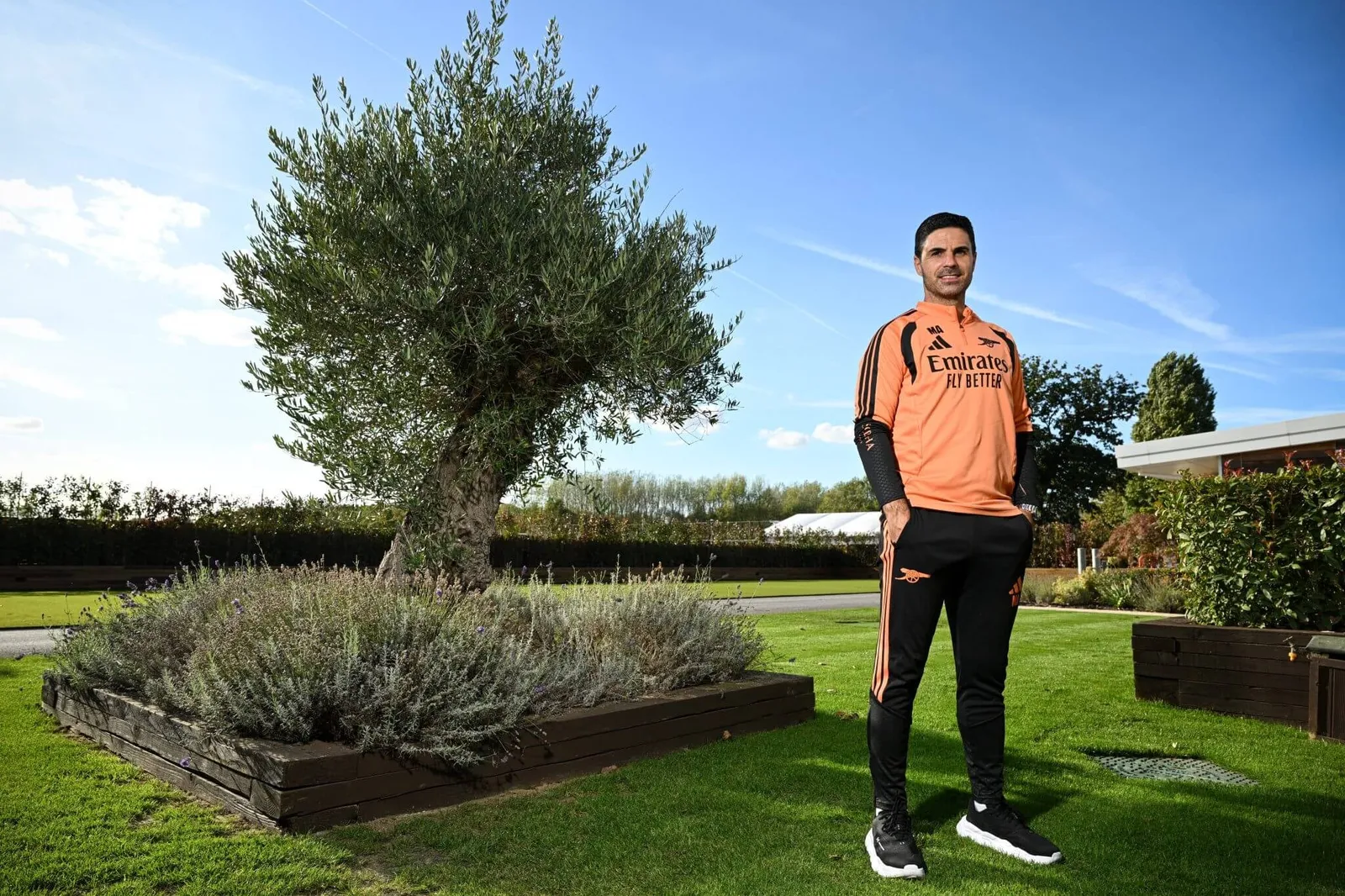
Mikel Arteta brought the 140-year-old olive tree to Arsenal’s training groundKevin Quigley for The Athletic
Last summer, Arsenal won the Premier League after a 22-year wait — a period that was at times painful, toxic, apathetic.
In 2019, Arteta returned to the club he played for and he reignited hope. He demanded ambition and accountability, brought creative ideas and family values, and eventually that all morphed into triumph. When they were finally declared champions last May, it uncorked a celebration so euphoric, so vivid, it took on a force of its own. Supporters representing every age and creed opened their doors, ran to the stadium, hugged, danced, sang, cried, opened champagne, climbed lamp posts, set off fireworks.
That night, Arsenal felt like the centre of the sporting universe. A couple of weeks later, at the end-of-season parade, around a million people took to the streets and all of London, in its multicultural glory, felt free to express themselves through Arsenal. Meanwhile, in faraway countries, satellite gatherings and celebrations took place, from a semi-nomadic tribe of cattle herders in Kenya to the Empire State Building being illuminated in red and white in the team’s honour.
Mikel Arteta on ending Arsenal's title drought
“It’s huge,” Arteta reflects. “Those moments make you realise, really, what we are capable of. Of making people feel. People are describing that ‘you guys changed our life’. What does that mean? Change somebody’s life? That’s something extremely important, because it can be for the good and it can be for the not-so-good. So, it comes with a lot of responsibility. We are blessed to have that opportunity to do that.”
To understand the impact of Arteta’s Arsenal, it is necessary to go back to the beginning. A former captain of the club, when he interviewed to become head coach at 37, he was under no illusions about the size of the task. The club needed a major overhaul. It needed someone capable of shouldering all the issues and lifting it toward a transformation. Stan and Josh Kroenke, the American owners, agreed with his innovative thinking for a cultural revolution.
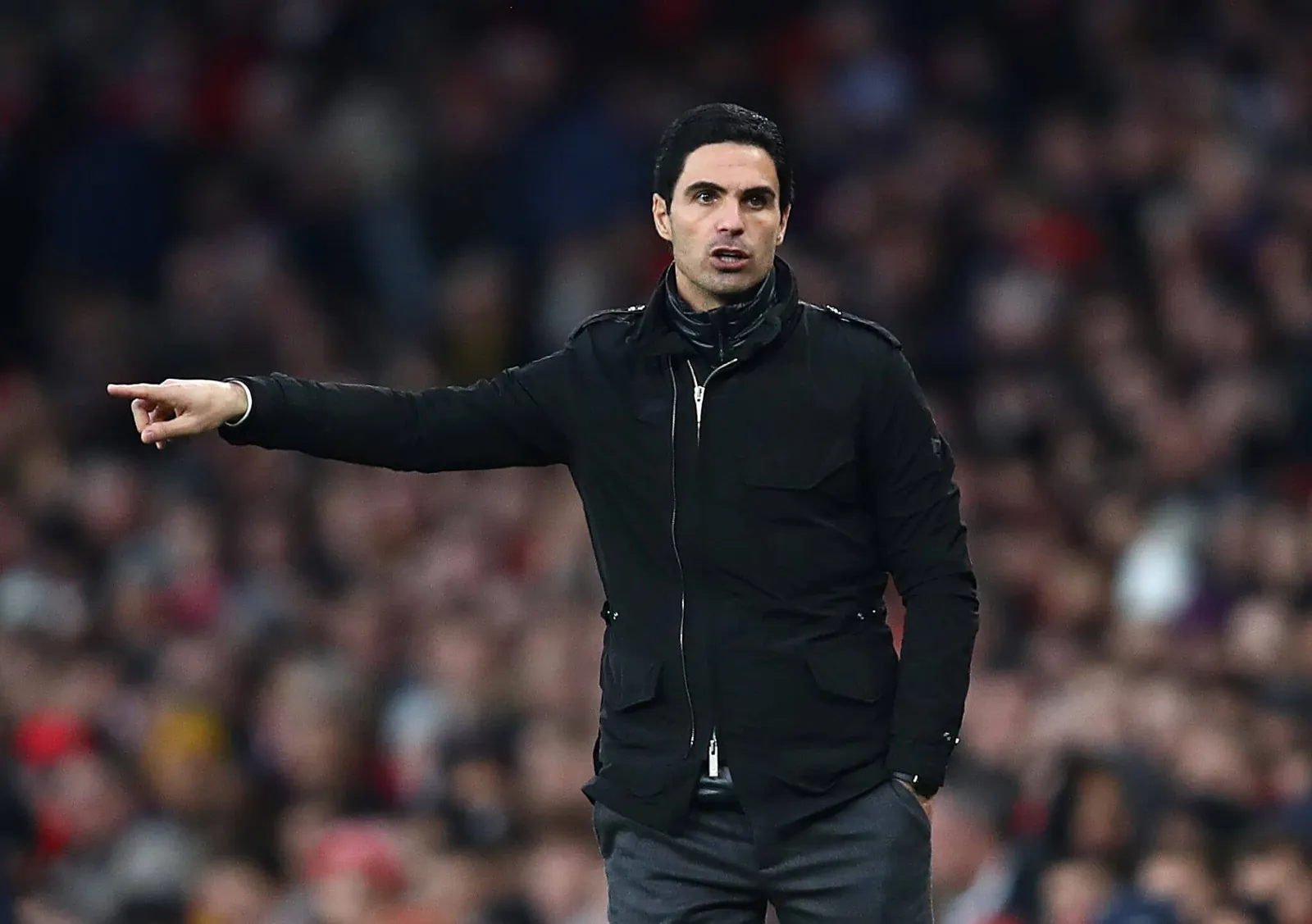
Appointed in 2019, Arteta has changed the culture at ArsenalJulian Finney/Getty Images
What Arteta did on his first day struck everyone. He metaphorically ripped everything up. He went to the biggest room in the training complex, usually used as an education centre, and made it chaotic. “I just destroyed the office and put everything on the floor — the computers, the laptops, the cables. Then bring everybody in.
“I said, ‘Listen, this is what I heard. I don’t know if it’s true. But from a lot of different people, the sentiment is that this is how they feel about working in the organisation. I’m here to help you enjoy your profession and your life and the passion that we all share. If you want me to help you to do that, you have two minutes to put this in order and at least to be ready to work together’. And I left.”
He walked out and closed the door behind him.
“I came back two minutes later and it was immaculate. Everyone was silent and had their eyes open and they were ready to listen. I said, ‘This is just the start. It’s something that we have to be in daily. Whatever we want to accomplish, we’re going to have to do it together. I cannot do it by myself. The issue that we have is much deeper than that, but the opportunity is infinite’.”
David Ornstein discusses the significance of Mikel Arteta's new contract
David Ornstein:
His mission was to unify everyone — from the owners to the staff to the players — and win over supporters tired of mediocrity. “I said, ‘If we can connect those things, we can create a monster’,” he recalls. It was one hell of an introduction to his methodology and principles.
He does possess a Pied Piper quality. Not everybody wanted, or felt able, to dance to his tune. They became expendable. But the majority found it compelling. Arteta gives off electric energy, and he tries to inspire people to give as much as they can muster.
“What I decided the day I accepted this incredible opportunity was I’m going to give my life, my soul, all my knowledge, and my best ability to deliver a dream — to connect this football club from top to bottom. Then I made a commitment with myself. I need to enjoy the journey and I’m going to live the journey. Because I didn’t know how tough it was going to be, I had no experience — I never did it before. I have to be so alert, so curious, and just go day by day.”
That sentiment was sorely needed when a global pandemic unfolded just weeks in. Arteta had to be resourceful, get to know everyone — virtually at first — and then in their football bubble, before some kind of normalcy resumed.
Arsenal is an interesting case study in how to reconstruct a sporting institution that got broken. When Kroenke Sports and Entertainment (KSE) chose Arteta, they saw the potential to be best in class. But they needed to give their man the time and financial backing to bring about considerable change. They developed a bond of trust that goes both ways. That kept the ship steady during inevitable storms.
Arteta developed an idiosyncratic management style. He is smart at all the technical and tactical aspects of coaching. But his special sauce is his appetite for ideas to keep things going smoothly.
Elite sport is bound by routines and repetition that create boredom. Arteta is constantly on the hunt for jolts to obliterate that. Those ideas come from all sorts of places: a chocolate Labrador called Win, trained as a therapy dog, lives at the training ground and brings her special brand of affection. Music has become a key part of the squad culture, with meaningful songs bringing everyone together. He has been known to use magicians, games, catchphrases, and bring unexpected people or experts in alternative fields into the dressing room.
Arteta has revealed parts of his personality and methodology over his time as Arsenal manager
“That creativity comes from the work that we do, especially by paying attention: what is the feeling? What do the players need? What are they seeking? We’ve been together for seven years and I like that they have the feeling that they come into the building and wonder, ‘OK, and what is it today?’.”
He is so invested in his players, in how they feel. That brings its own challenge. On one hand, he likes to forge a sense of family unity; on the other, he has to be ruthless.
“I learned that as a father,” he says. “We don’t ever forget that there are two sides, the human side and the professional side. Mikel, as a human, is going to try to look after those players like they are my own children. But Mikel the manager has a responsibility to win football matches. I have to put on the pitch the players that are going to help us to do that.”
For extra insight into Arteta’s driven mind, an instant answer to a tricky either/or question is revealing. Offered the chance to relive a momentous game again completely unvarnished, the choice is an imperious 3-0 victory over Real Madrid in the Champions League, or the traumatic 1-0 squeeze over West Ham United that was so sickeningly tense their Premier League hopes were almost destroyed.
“The West Ham game,” Arteta says, with a twinkle in his eye.
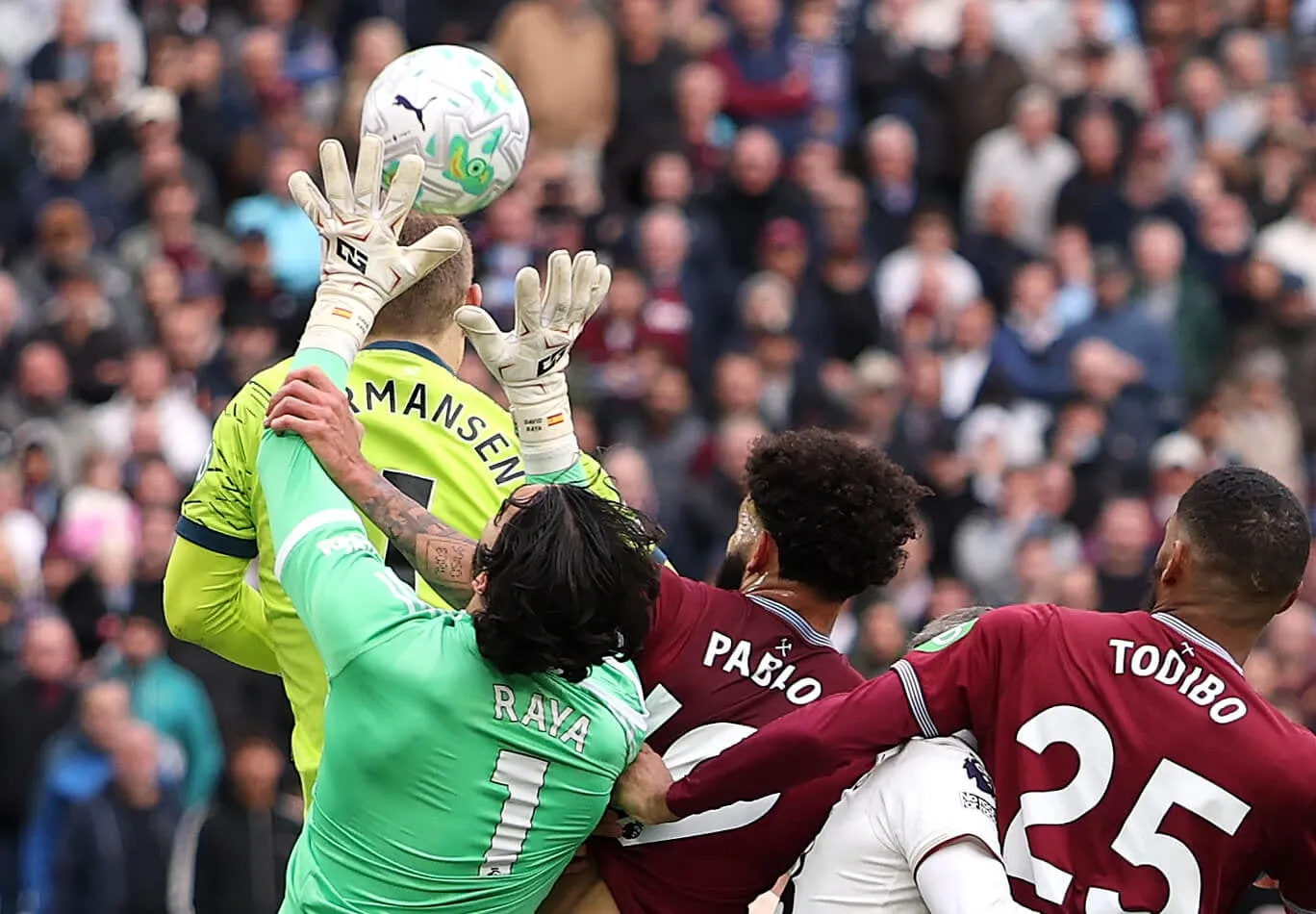
Mikel Arteta would gladly relive the tension of last season’s West Ham winAlex Pantling/Getty Images
Really?
“Yeah. This is football elevated to its best version, when a journey, a moment that can change so many people’s lives, goes one way or the other. You just pray because you know if it goes the wrong side, probably it’s gone again.
“That day when I went home, I said, ‘We’re going to be champions. It is our year. This has happened for a reason, and we’re going to get it done’.”
Winning the Premier League was a game changer. “It wasn’t just a trophy. It was a moment that we’re going to remember for the rest of our lives,” he says.
It meant something extra because they overcame such a powerful rival in his old club, Manchester City, and the manager he studied under, Pep Guardiola.
English football has been in turmoil since City, the dominant team of recent times, were found guilty of breaking almost all of the Premier League’s charges relating to financial breaches as they built towards their own success.
It would be understandable if Arteta harboured mixed feelings. He knows people at City. He worked there. More recently, they have represented a serious barrier to overcome. Twice in the three years that Arsenal finished runner-up, City beat them to it, and it hurt.
The flipside to the joy of the Premier League coronation came when Arsenal lost the Champions League final a few days later against Paris Saint-Germain through a devastating penalty shootout. This was a sporting experience on the other side of that fine line.
Arteta’s old manager, Arsene Wenger, called the most painful defeats “a scar on my heart”. Arteta feels the same. “I still have the scar, like Arsene says. I still have that poison in my veins. It has to stay there because that’s when you learn and that probably is going to be a massive driver for me and everybody.”
Arteta’s idea of transformation is unfinished. All the aspects excite him.
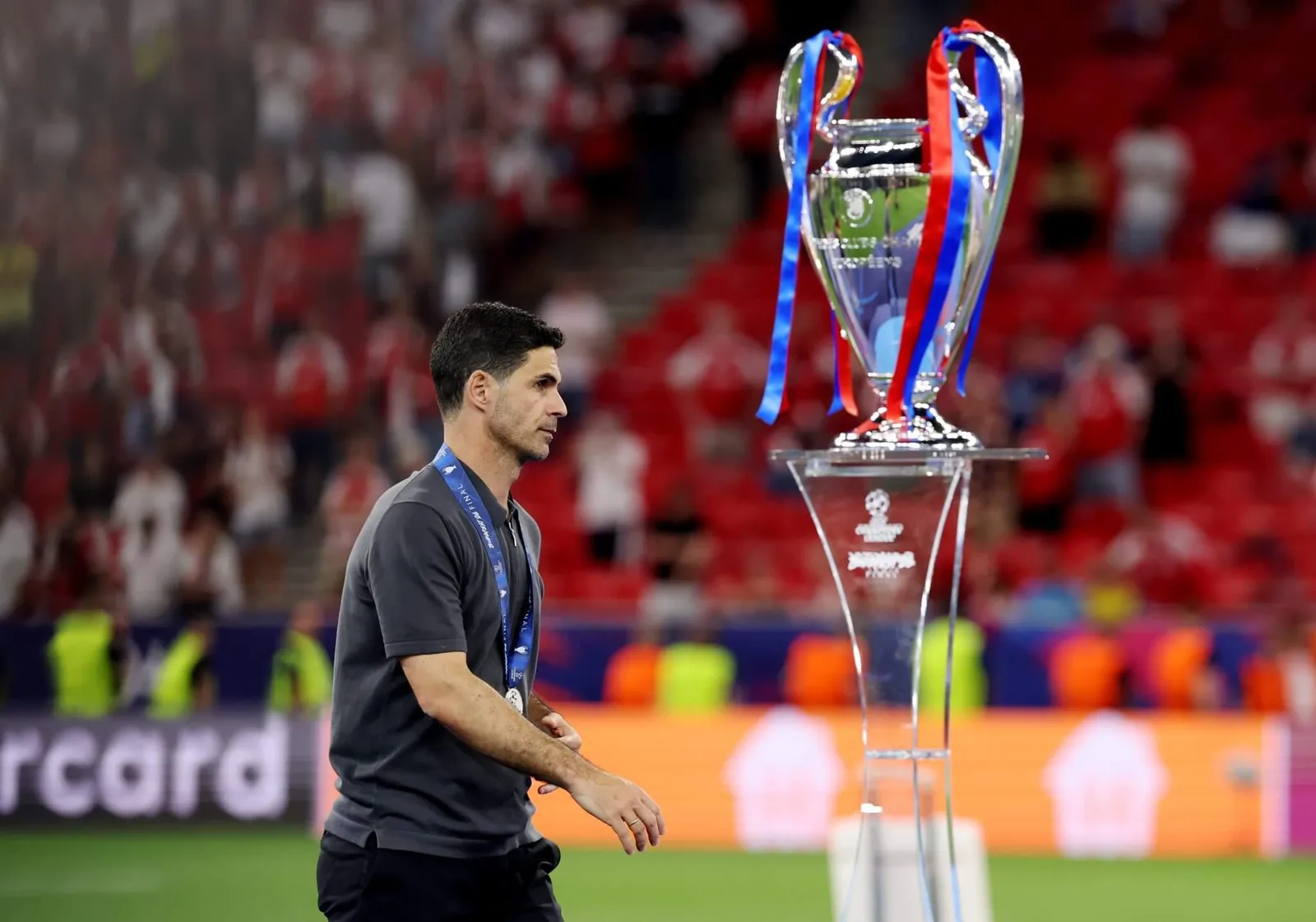
Mikel Arteta says the Champions League defeat left a scarCarl Recine/Getty Images
“Globally, with our supporters? Great. How are we going to build the next three squads? Great. How the rules of the game are going to change us, and how we’re going to stay ahead of that to take advantage? Great. But this is going to happen if every single day we look after what we built. We make it a little bit better, like software that is upgrading and upgrading. When can it stop is infinite.”
Representing Arsenal values means a lot to him. “There is an element of class, of behaviour, of light, of soul. There is something difficult to explain with words, but this club has an aura. It has an energy that attracts you, gets inside you, traps you, it stays with you.” And now he is staying with them. “It feels like it’s still a lot to do,” he says, “and it’s just the beginning.”
On their way out to training, the players at Arsenal run past the olive tree. It is striking in this English landscape. But if anyone, literally or figuratively, messes with so much as a leaf, they will be gone. It is incumbent on everyone to look after what they are striving for at Arsenal.
Tags
More in Premier League
View all ›7 Oct 2026
Premier LeagueChelsea co-sporting director Laurence Stewart set to leave: What is his legacy at the club?
About the author

Collins Godfrey
Writer