70th Edition of the Ballon d’Or Awards: What the Journey Has Been
From a 1956 French magazine experiment to football's ultimate global obsession, the Ballon d’Or reaches its historic 70th anniversary. Here is the story of how an award that excluded Pelé and Maradona survived FIFA mergers, rule overhauls, and seven decades of glorious chaos to become the crown every footballer dreams of.
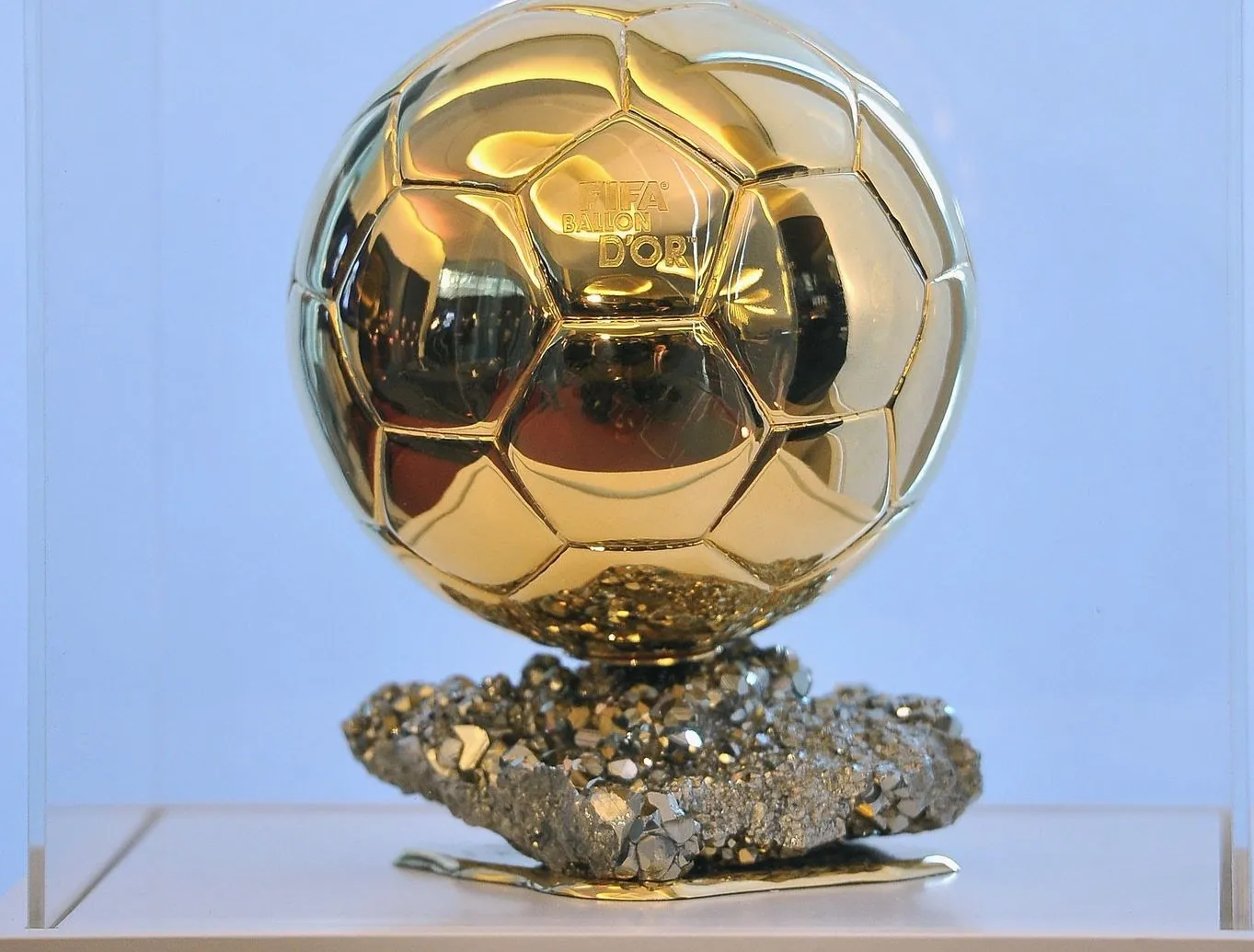
It’s that time of the year again.
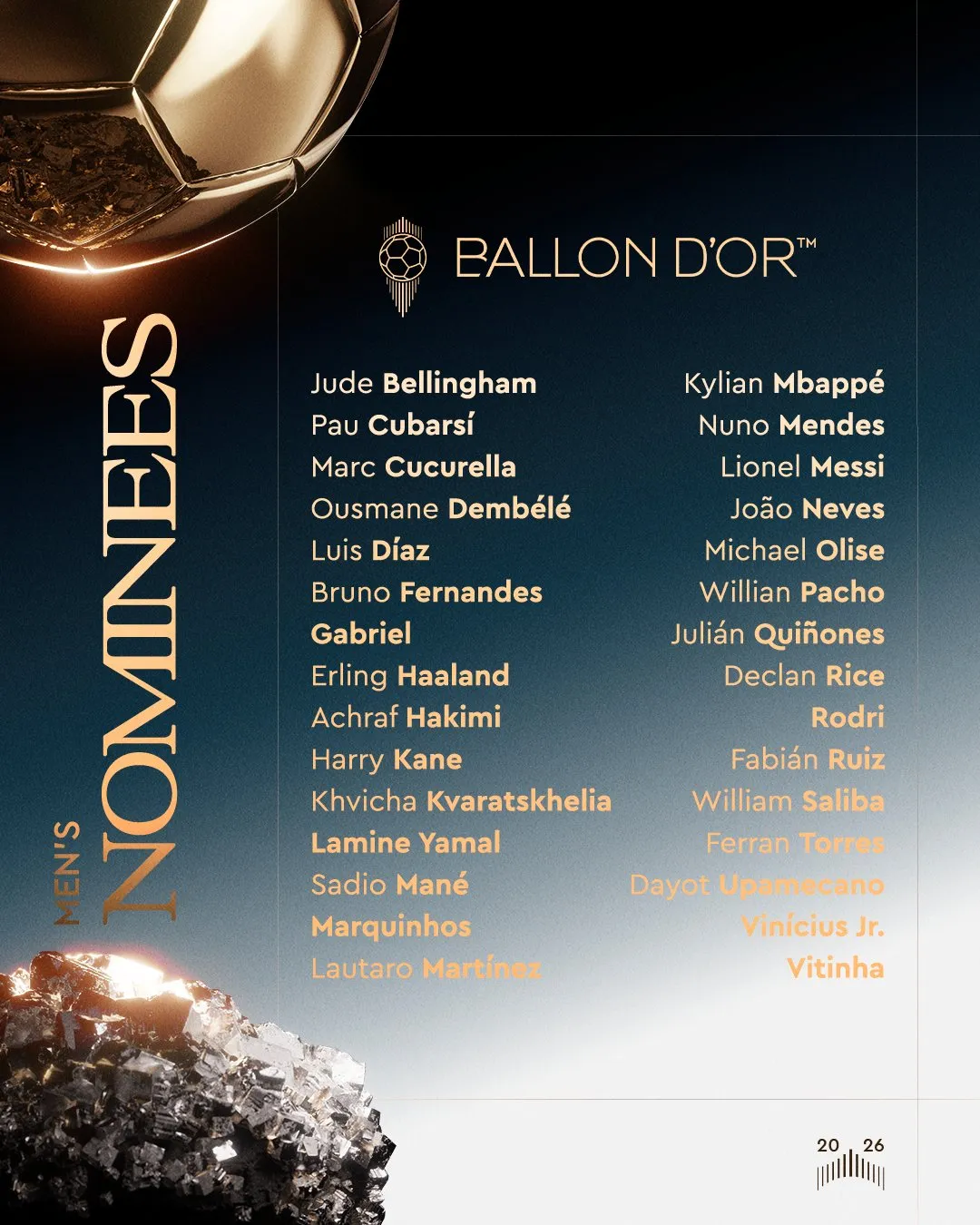
The Ballon d’Or nominations drop, and football immediately loses its mind.
Who is missing? Who has no business being there? Who should win?
And somehow, 70 years later, we are still having the same argument over a golden ball.
But here’s something a lot of people don’t know:
The Ballon d’Or was never created by FIFA. It wasn’t created by UEFA either.
It also doesn’t belong to the French Football Federation.
It started as a magazine idea.
In 1956, France Football decided it wanted to answer a simple question: who was the best footballer in Europe?
Journalists Gabriel Hanot and Jacques Ferran were among the key figures behind the idea. Journalists from 16 countries were asked to vote, and the first winner was a 41-year-old Englishman named Stanley Matthews.
That was it.
A French football magazine had created an award that would eventually become the most famous individual prize in football.
And the Ballon d’Or Matthews won was very different from the one we know today.
For decades, the award was restricted to European players.
So some of football’s greatest-ever players couldn't even win it.
Pelé couldn't. Maradona couldn't.
Not because they weren't good enough. They simply weren't eligible under the rules of the time.
In 1995, the rules changed. Players of any nationality playing for European clubs became eligible.
Then, in 2007, the award finally became genuinely global.
And then came another strange chapter.
From 2010 to 2015, France Football's Ballon d’Or merged with FIFA's World Player of the Year award.
For those six years, it became the FIFA Ballon d’Or.
Then the partnership ended.
France Football went back to running the award under its own name.
So even today, when someone says, “UEFA gives the Ballon d’Or,” that isn't quite right.
France Football still owns and presents the award through the L’Équipe Group. UEFA has been co-organising the ceremony since 2024.
And then there is the part that makes this whole thing so entertaining.
The Ballon d’Or is not a mathematical award.
There isn't a computer somewhere calculating:
73 goals + Champions League + trophies = Ballon d’Or.
Journalists vote.
And journalists are human.
Which means the award has always been vulnerable to arguments about trophies, statistics, individual brilliance, big-game performances, reputation, narrative and, inevitably, bias.
That is why every generation has its “robbed” player.
Sneijder. Ribéry. Xavi. Iniesta. Lewandowski. Haaland. Vinícius. Etc.
The names change. The argument doesn't.
Then there was 2020.
The award was cancelled because of the COVID-19 pandemic, meaning there was no Ballon d’Or winner that year.
Robert Lewandowski had just produced an extraordinary season, so the cancellation became one of the award's biggest what-ifs.
We can debate whether he would have won it.
But we'll never actually know.
And perhaps that uncertainty is part of what makes the Ballon d’Or so powerful.
You don't have to agree with it for it to matter.
And there was another major change that people often forget.
For most of its history, the Ballon d’Or was judged on a calendar year.
January to December.
That sounds simple, until you realise how awkward that was for football.
A football season doesn't run from January to December. It usually starts around August and finishes the following May or June.
So voters were effectively judging two different seasons at once.
A player could have an incredible second half of one season, then a brilliant first half of the next, and both would count toward the same Ballon d’Or.
France Football eventually decided that didn't make much sense.
In 2022, the rules changed.
The Ballon d’Or would now be judged on a complete football season, roughly from August to July, rather than the calendar year.
That meant the 2022 Ballon d’Or judged the 2021–22 season.
And it created an important little wrinkle: the 2022 World Cup in Qatar didn't count for the 2022 Ballon d’Or.
It happened in November and December 2022, after the assessment period had already ended.
Instead, the World Cup was pushed into the following year's award.
So Lionel Messi's World Cup-winning campaign in Qatar was part of the case for his 2023 Ballon d’Or, not the 2022 one.
That might sound like a technicality.
It isn't.
It completely changed the way the award could be understood.
Instead of asking, “Who was the best player over the last 12 months?”
The question became:
“Who was the best player of the season?”
And honestly, that makes a lot more sense for football.
Lionel Messi has won it eight times — more than anyone.
Cristiano Ronaldo has five.
Johan Cruyff, Michel Platini and Marco van Basten have three each.
Lev Yashin remains the only goalkeeper to win the men's award.
George Weah remains the only African player to win it.
And now we have reached the 70th edition.
The 2026 ceremony will take place in London on October 26 — the first time the Ballon d’Or ceremony has left Paris.
There is something almost beautifully circular about that.
The very first winner was an Englishman.
Seventy years later, the award is coming to England to celebrate its 70th edition.
Think about how strange this journey is.
A magazine creates a small European football award in 1956.
It excludes some of the greatest players in history because of nationality rules.
It expands. It merges with FIFA. It separates again. It survives decades of arguments, controversies and changing football culture.
And eventually, it becomes the award every footballer dreams of winning.
The Ballon d’Or was never supposed to become all of this.
It was just journalists answering a simple question: Who was the best?
Seventy years later, we're still arguing about the answer.
Maybe that's the real @ballondor
Who do you think deserves the Ballon d'Or this year?
Featured Images via Pascal Le Segretain/GettyImages & @ballondor/X
Tags
More in Analysis
View all ›About the author

Chikamso 'Mr Focus' Okoye
Editor
Writer/Editor at Somtosports.com & Writer/Admin at Football Focus. I write to feel good