The English soccer star who vanished for 40 years to hide his secret: ‘I was living in fear’
Former English footballer Tony Powell spent decades away from the spotlight, living in fear as he kept his sexuality secret from the football world.

Tony Powell is asked if he remembers the names of his two daughters. Head in hands and deep in thought, when the realisation sets in that he does not, he concedes: “That is f***ed up.”
In 1981, Powell — a former Bournemouth and Norwich City central defender — moved to the United States for the final years of his playing career. He left England, his family, his wife (with whom he had abruptly split up), his two young daughters and his entire life. For decades, his whereabouts were unknown. “It was like he was wiped off the face of the earth,” says Powell’s sister, Jane Stiddard.
Now aged 79, Powell’s story is told in the feature-length documentary “The Last Guest at the Holloway Motel”, from which the above quotes come.
“The film came about entirely by accident,” its co-director Ramiel Petros tells The Athletic.
Petros, alongside co-director Nick Freeman, had originally planned to shoot a short on the planned closure of the rundown Holloway Motel on Santa Monica Boulevard in West Hollywood, Los Angeles, and the local homeless crisis.
The pair had noticed Powell — who played in English football’s top flight for several years, won Norwich’s Player of the Year award and was part of their team that lost the 1975 League Cup final to Aston Villa in front of a 95,000 crowd at Wembley — sitting on the motel’s balcony each day, drinking glasses of wine. When he revealed his past as a top-level footballer in England, everything changed.
“The speed at which the film unfolded from there was extraordinary,” Freeman says. “Each week, there was a narrative-changing revelation.”
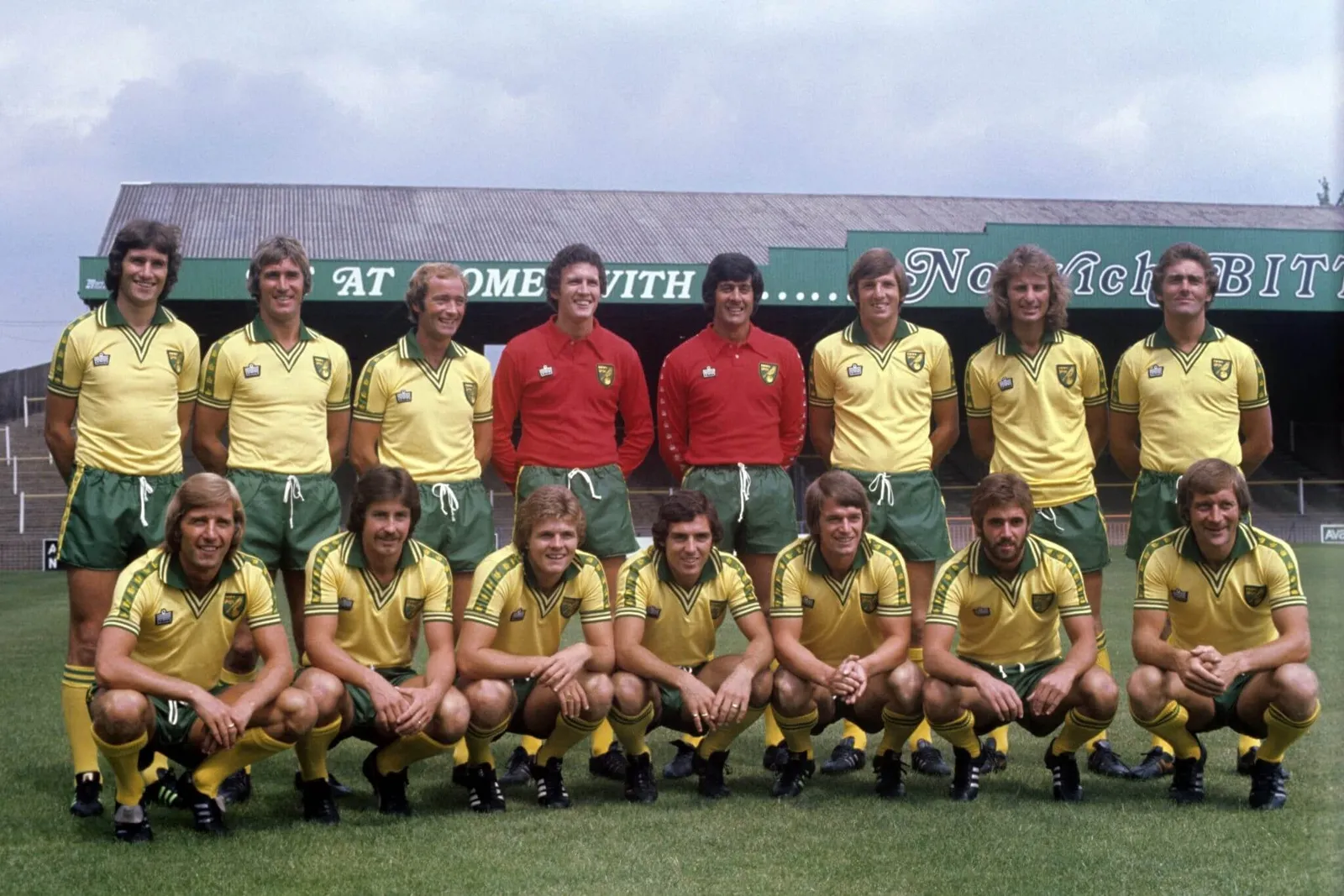
Powell (back row, second right) as Norwich line-up before a First Division game in 1976PA Images via Getty Images
Petros and Freeman, making their first documentary, stumbled on a gold mine of information and secrets.
Their documentary swiftly establishes Powell’s motivation for cutting all ties personally and professionally, centred on apprehensions over revealing his homosexuality.
Powell’s final three seasons in England were spent with Justin Fashanu as a team-mate at Norwich. In 1990, Fashanu became the first footballer in the United Kingdom to come out as gay. Eight years later, he died by suicide at a lock-up garage in Shoreditch, east London.
In the film, Powell recalls meeting the love of his life, David Castro, in Los Angeles. Castro had contracted HIV, which developed into AIDS. Powell insisted he cared for him at home, rather than seeing him spend his final days in a hospice, and movingly recalls how he passed away in his arms.
“Tony had two lives,” Robbie Rogers tells The Athletic.
Rogers, who played for the USMNT 18 times between 2009 and 2011, helped co-produce the film. In February 2013, weeks after leaving Leeds United, Rogers became the second UK-based male footballer, after Fashanu, to come out as gay. “Throughout filming, you can see Tony revealing his true self and then withdrawing again,” he says.
“I had a reputation as a tough guy on the field,” Powell says in the film. “You were being someone you were not. I was living in fear.”
Powell spent 25 years at the Holloway Motel, first as its manager, and then as its last occupant before it closed and offered temporary housing for homeless people in September 2025.
The documentary charts Powell’s life unraveling; losing his job and his home, then the death of his beloved dog of 17 years, Sam, whom he describes as his “daughter”.
Powell’s fondness for alcohol is a theme throughout, as is his deteriorating health, with decreased mobility and losing his balance at home before complaints of significant chest pains lead to hospitalisation.
“When Tony goes through his health crisis, he was scared and lonely. We maybe became a support system for him,” Ramos says. “After that period, he felt more comfortable talking with us and opening up, because it felt like friends talking rather than a formal process.”
“This documentary helped save Tony’s life,” Rogers says. “He is becoming homeless and jobless, he is ill, and he would never have reconnected with his family.”
Freeman adds that aside from Powell’s remarkable personal story and the theme of homosexuality within a societal and sporting context, the film also highlights the “dangers of being old, vulnerable and isolated”, and the importance of talking, of checking in with neighbours.
“Tony became our friend,” he says. “At times, it was very difficult, because we were filming and he was clearly struggling. We never wanted to leave when Tony may have felt alone, or unsupported. We are telling an impartial and complicated story, but that was difficult.”
The biggest fear is like my family (saying), ‘Oh, you’re gay? Get the f*** out of here’,” Powell says in the film.
“Back then, you couldn’t come out to your parents. You had to keep it to yourself, and pretend to be one of the boys.”
Tony’s parents passed away within a few years of his move to the United States to join San Jose Earthquakes, when he ended all communications with his former life, including his siblings Jane, Denise and Roy. The family only discovered he had left his wife, Marilyn, after Tony’s father rang her to ask of his whereabouts.
“Maybe he thought we would be ashamed of him, rather than still proud of him,” Denise says in the film. Rumours began to circulate that Tony had passed away.
There appeared to be a breakthrough in 2002, when Norwich made an appeal to relocate former players for its centenary year. It was suggested that Powell was now running a motel in Hollywood. Jane and Denise say they posted letters including old family photos but got no response. They called the motel and asked for Tony Powell. Denise tells the film she is certain it was her brother’s voice on the other end of the phone, but the person said nobody of that name worked there.
“Him walking away from us was one thing,” Denise says in the film, “but from his girls? That was different.”

Powell broke off all contact with his family when he moved to the U.S. in 1981Ray Wright/Offside via Getty Images
That’s a reference to Kelly and Danielle — the young daughters whose names he could not remember years later.
“It’s easy to make judgments on me, but you don’t know what it was like to walk in my shoes at the time,” Powell says in the film. “I’m not an evil b*****d who abandoned my kids. People may see that, but that’s not what happened.”
For those involved in the film, this is particularly relevant for its messaging.
“Tony makes awful decisions,” says Rogers. “But why does he make them? How are they shaped by society? This process is about helping people understand.”
Tags
More in Football Gists
View all ›7 Oct 2026
Football GistsThe Passing Of The No. 10 Torch; Messi Assists Nico Paz In Argentina farewell
About the author

Collins Godfrey
Writer