Man City’s 2009-18 signings changed the fate of their Premier League rivals. No wonder they’re angry!!!
Manchester City's transformative recruitment between 2009 and 2018 reshaped the Premier League, changing the fortunes of rival clubs and intensifying the debate over their dominance.
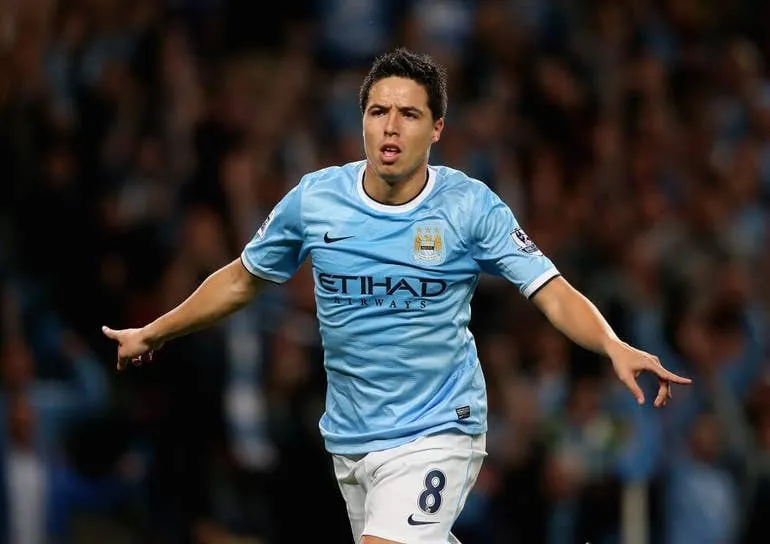
It took the former Aston Villa striker Gabriel Agbonlahor, speaking on talkSPORT this week, to give a fresh perspective on how the Premier League’s other clubs might feel about Manchester City and what is now known about their rise.
Agbonlahor spoke from the viewpoint of having been a star of Martin O’Neill’s young Villa team in the second half of the 2000s. That is to say, precisely when football changed forever, when City were bought by the Abu Dhabi United Group (ADUG) in September 2008.
Villa were the insurgent team in the top flight at that point. They finished sixth in 2007-08, O’Neill’s second season in charge. On the opening game of the next season, just weeks before the takeover, they beat City 4-2 at Villa Park. Agbonlahor scored a hat-trick. Villa finished sixth again that year.
But in the summer of 2009, the first full summer with that Abu Dhabi money, City bought Gareth Barry from Villa for £12million ($15.9m at current exchange rates), one year on from Barry nearly joining Liverpool.
It was a huge moment, an established England international — Agbonlahor called him Villa’s “best player” — joining the upwardly mobile City. The midfielder was not the only one of course, and in 2009-10 City finished fifth, one place ahead of Villa. And then, it happened again.
“You know what they did in 2010?” Agbonlahor said during that talkSPORT appearance. “They took our best player, James Milner.”
Milner joined for £16million, with Stephen Ireland going the other way as part of the deal. O’Neill left Villa just before the start of the 2010-11 season. Barry and Milner won the 2011 FA Cup with City, who finished third. Villa came ninth.
Villa never fully recovered, spending the next few years in the bottom half of the table. In the summer of 2015, City took their “best player” again, in Agbonlahor’s words, signing Fabian Delph. Villa finished bottom in 2015-16 and spent three years in the second-tier Championship.
Agbonlahor spoke with conviction about how he felt, as a Villa player, to have seen his best team-mates bought by City.
“So as a Villa fan — and as a Villa player — in that era, a bunch of cheaters has taken our best players,” he said. “We’ve gone to the Etihad and got some spankings from Yaya Toure, Sergio Aguero and David Silva. But where did they get the money to buy these players? Every team will look at it.”
The Premier League reviewed previously undisclosed documents that shed new light on how Manchester City became a commercial superpower
Some people will say the transfer market is just part of life in football, and that richer teams have always bought better players from teams with less money. That is just how the game has always worked.
You might argue that Villa did fairly well out of these deals and that, had they re-invested the Barry and Milner money better, they could have built another good team. One of the stories of the Premier League in recent years has been that clubs who are good at selling their players up the chain and reinvesting — such as Brighton & Hove Albion and Brentford — have flourished.
But still, there is no doubting the impact on Villa that Barry and Milner’s exits had. And City signing Villa’s best two players in consecutive summers, as they leap-frogged over the Birmingham club towards the top of the league, was no coincidence.
City were smart in the first few years after the takeover in targeting the teams who stood in their way. Not so much Manchester United (Carlos Tevez aside) and Chelsea, but the sides who were their more immediate rivals back then. As Garry Cook, the former City chief executive, was quoted in Josh Robinson and Jon Clegg’s book The Club: “We crippled Villa.”
Villa were not the only side who City targeted in those early years.
In the summer of 2009 — when City signed Barry — they wanted Joleon Lescott from Everton. David Moyes’ side had just recorded consecutive fifth-placed finishes — they were even closer to the elite than Villa — and losing Lescott was hugely disruptive. City bought the defender for £22million and he became an important part of their rise to the top. Everton had to rebuild, selling Jack Rodwell to City in 2012, and did not finish in the top five again until 2013-14.
Perhaps the biggest example of this, however, is Arsenal. They were going through a rebuild at the start of the Abu Dhabi era at City, hamstrung by the costs of their new Emirates Stadium, opened in 2006. But Arsene Wenger’s team had excellent players, with the top-end experience City needed.
City started with Emmanuel Adebayor and Kolo Toure in 2009, and then in 2010-11 finished third, with Arsenal fourth. They then signed left-back Gael Clichy and, most painfully of all for Arsenal, Samir Nasri.
That was the summer Cesc Fabregas went back to his boyhood side Barcelona, which had always been factored into Arsenal’s expectations. But to lose Nasri too, and to City, hurt. Especially when Nasri then won the league with City in his first season there. Perhaps no wonder, then, that Robin van Persie wanted to leave the following year, and ended up at Manchester United, where he won the Premier League
Even after City won the Premier League in 2011-12 and again in 2013-14, their signings continued to disrupt their rivals.
More and more of their best new arrivals started to come from abroad — Fernandinho from Shakhtar Donetsk in 2013 and Kevin de Bruyne from Wolfsburg in 2015, for instance — which is another story in itself. But even within the Premier League, City’s signings threw other teams off-course. Raheem Sterling leaving Liverpool for City dominated the summer of 2015, as well as most of the previous season.
Two years later, City underwent another summer rebuild, not just looking to take players to weaken their rivals, but to hand manager Pep Guardiola the tools he needed to dominate English football.
Guardiola needed pace at full-back to give his team genuine width. They went for Kyle Walker of Tottenham Hotspur, who was looking for a way out of north London. City signed him for more than £50million, one of the biggest fees paid for a defender in this country.
Walker was the first of the Mauricio Pochettino team to depart. And while the rest of his team-mates stayed at Spurs, there was a subtle change in the atmosphere there, as the rest of them suddenly knew the money — and trophies — available were they to leave.
There is nothing legally or morally wrong with buying players (where the money came from is clearly a different matter). But when Agbonlahor speaks of the disruption that City’s millions did to Villa — and to many of their rivals — you can understand the depth of their frustration.
Tags
More in Premier League
View all ›29 Sept 2026
Premier LeagueManchester City Finances Allegedly Inflated by More Than £900m, Independent Commission Finds
About the author

Collins Godfrey
Writer